
Mental Health in Construction: Risks and Solutions
Construction workers in the UK are three to four times more likely to die by suicide than the national average. Most sites take hard hats, harnesses and fall protection seriously. Far fewer manage the risk that kills more of their people than falls from height.
In 2021, 507 people working in construction occupations in England and Wales took their own lives, and 503 of them were men (Lighthouse Charity). Research by Glasgow Caledonian University found the rate rose from 26 to 34 per 100,000 workers in the seven years to 2021, the highest since its analysis began. The Lighthouse Charity puts it simply: around two construction workers take their own lives every working day across the UK and Ireland (PBC Today).
The problem has not gone away. Provisional ONS data shows 355 people in skilled construction trades alone died by suicide in England and Wales in 2024. That is a rate of around 29.1 per 100,000 workers, against a national average of about 9.6 (FMB).
This post explains why construction carries such a high mental health risk, the warning signs to watch for, and the practical steps any site can take.

Why construction is high risk for mental health
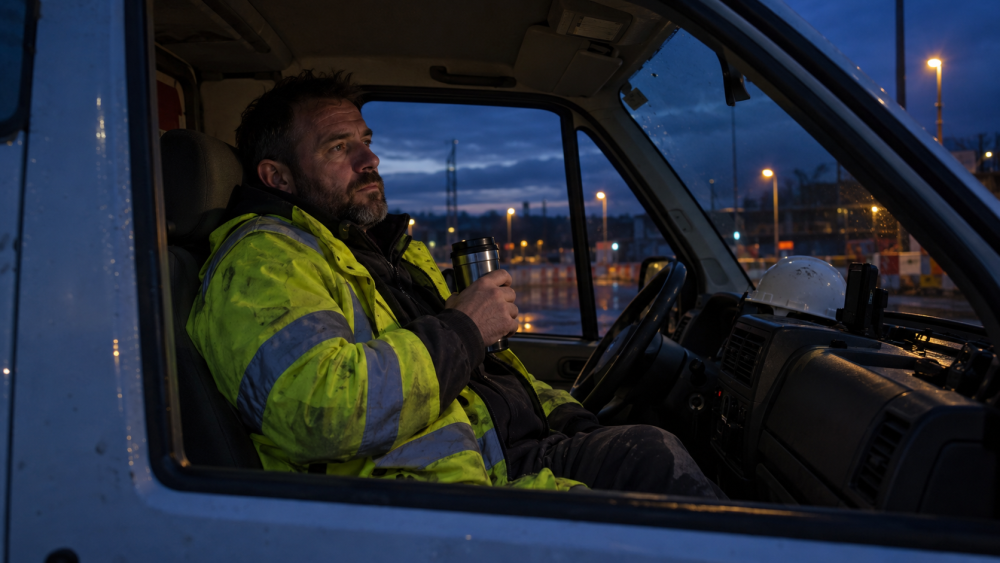
The risk comes from how construction work is organised, not from weak individuals. The Construction Leadership Council's 2026 Mental Health Joint Code of Practice groups the causes into a handful of workplace hazards (Griffiths & Armour). Here is what they look like on a real site.
Long hours, travel and time away from home
Early starts, long shifts, weekend work and long commutes leave little time for rest, family or friends. Many workers stay away from home for weeks on end, which cuts them off from their usual support.
Insecure work
Over half the workforce is self-employed, agency staff or on zero-hours contracts (Lighthouse Charity). No work next month means no pay next month. Worry about money and the next job is a constant background stress.
Pressure from deadlines and poor planning
Unrealistic programmes, late design changes and poor communication push pressure down the supply chain. Penalties for delay often land on the people with the least control.
A "man up" culture
More than 87% of the workforce is male. Many men on site feel they should cope alone, and talking about feelings can be seen as weakness. That silence stops people asking for help until they reach crisis point.
Physical strain, injury and pain
Heavy manual work leads to injuries and chronic pain. Pain affects sleep and mood, and an injury that stops someone working can bring money worries and a loss of identity.
Poor welfare and how people are treated
Dirty welfare cabins, no respect from management, bullying and banter that goes too far all wear people down. The Code lists welfare, dignity and respect as a core hazard in its own right.
Alcohol and drugs
Some workers use alcohol or drugs to cope with stress, pain or being away from home. This can make low mood worse and increase risk.
Warning signs to look out for on site
You don't need to be an expert to notice when a colleague isn't himself. In one survey, 73% of construction workers felt their employers don't recognise early signs of mental health problems (Builders Merchants News). Look out for changes like these:
- Turning up late, missing shifts or seeming exhausted
- Going quiet, avoiding breaks with the team or keeping to himself
- Losing his temper more easily, or arguing over small things
- Making more mistakes, near misses or taking unusual risks
- Drinking more, or smelling of alcohol at the start of the day
- Talking about money worries, a break-up or problems at home
- Saying things like "what's the point" or "everyone would be better off without me"
- Giving away tools or belongings, or seeming suddenly calm after a hard spell
If you notice these signs, ask how he is, then ask again. A simple "you don't seem yourself, are you alright?" can open the door. If you are worried someone is thinking about suicide, it is OK to ask them directly. Asking does not put the idea in their head.

What sites can do
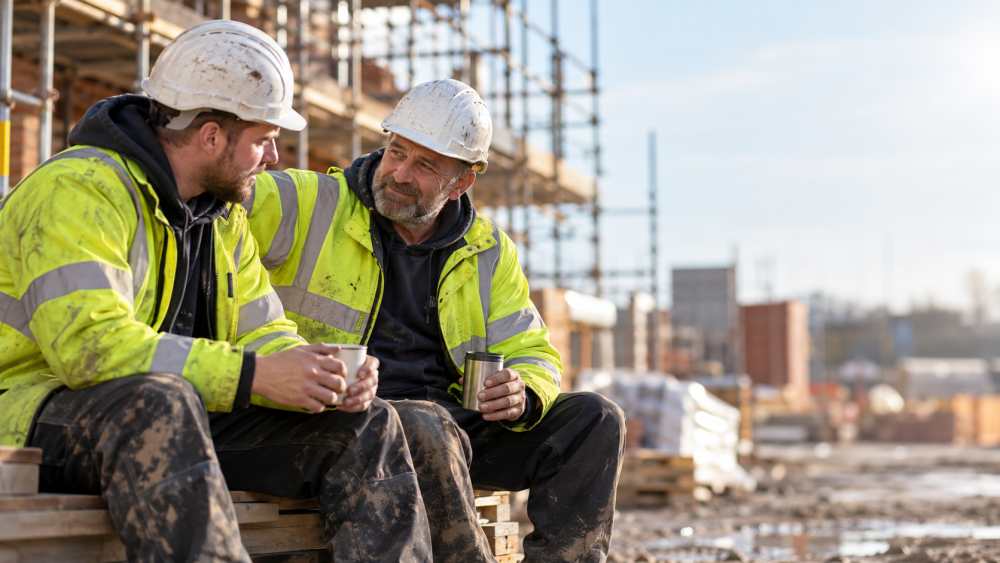
The best approach treats mental health like any other safety risk: find the hazards, control them and check it's working. The CLC's Joint Code of Practice, launched on 15 June 2026, uses exactly this Plan-Do-Check-Act approach so psychological risk gets the same rigour as physical risk (British Safety Council). These are practical steps any site can start on.
1. Put mental health in the risk assessment. Look at hours, travel, deadlines, welfare and workload the same way you assess work at height.
2. Plan realistic programmes. Build in time for delays and avoid making long hours and weekend working the norm.
3. Train Mental Health First Aiders. Aim for trained people on every site and every shift, and make sure everyone knows who they are, for example with a sticker on their hard hat.
4. Talk about it in inductions and toolbox talks. A short, regular talk normalises the subject. Share real stories where people are willing.
5. Make help visible. Put helpline numbers on posters in welfare cabins, toilets, canteens and on the back of site passes.
6. Train supervisors to have the conversation. Foremen and site managers see their teams every day. Give them the confidence to ask, listen and signpost.
7. Improve welfare facilities. Clean, warm cabins and decent toilets show people they matter.
8. Stamp out bullying. Make it clear that banter which targets or humiliates someone is not acceptable.
9. Include subcontractors and agency workers. Extend support and training to everyone on site, not just direct employees.
10. Sign up to the Building Mental Health Charter and follow the CLC Joint Code of Practice to show your commitment and benchmark your progress.
Start small if you need to. A visible helpline number and one honest toolbox talk this week are better than a perfect strategy next year.
Conclusion
Mental health harm is not an inevitable part of construction work. It is shaped by how work is planned, resourced and led, which means sites have the power to change it.
Start today. Put the helpline number up, run a toolbox talk, and ask the people around you how they are really doing. One conversation could save a life.