
Working at Heights UK: 10 Common Safety Mistakes to Avoid
Falls from height remain the single biggest cause of workplace fatalities in Britain. The HSE's Work-Related Fatal Injuries in Great Britain 2024/25 report confirms 35 workers were killed after falling from height — around 28% of all worker deaths that year and the leading cause of fatal injury in almost every year since 2001/02. Thousands more suffer life-changing injuries. Despite decades of regulation, the same working at heights UK mistakes keep appearing on sites year after year.
The Work at Height Regulations 2005 are clear: any work where a person could fall a distance liable to cause injury is classed as working at height — even at low levels. Yet too many height workers still treat short tasks as low risk, skip checks, or assume someone else has sorted the safety side.
This guide walks through the most common working at heights UK mistakes seen on construction, maintenance, telecoms, and roofing jobs — and what proper height safety looks like in practice, including the right height safety systems and height safety solutions for each task.
For anyone involved in working at heights UK projects, the biggest risk is often not the height itself, but poor planning, wrong equipment, or skipped inspections.

1. Treating Short Jobs as 'Not Really Working at Height'
The most common — and most dangerous — assumption on UK sites is that a five-minute job on a stepladder doesn't count as working at heights in the UK. Under UK law, it does. Most fatal falls happen from below four metres, and a significant proportion are from heights of under two metres.
If a worker could fall and be injured, the full hierarchy of control applies: avoid the work at height if possible, prevent falls using a safe platform, and only then consider minimising the distance and consequences of a fall.
What good looks like: a quick risk assessment for every task, even a 10-minute one, and a tower or platform instead of a leaning ladder wherever the job will take more than 30 minutes.
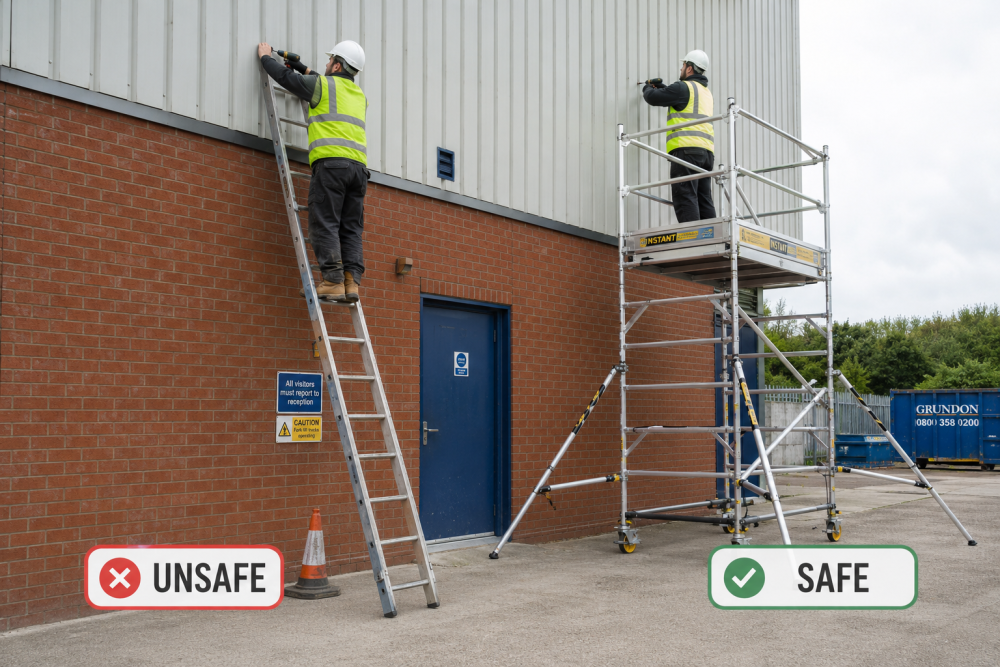

2. Using the Wrong Access Equipment for the Job
Leaning ladders are still being used as workstations on jobs that should be done from a tower scaffold, MEWP, or fixed access platform. A ladder is a means of access, not a place to work for extended periods or for any task requiring two hands or significant force.
Common equipment-selection errors include:
• Using a domestic stepladder for commercial work it isn't rated for
• Choosing a leaning ladder for a 45-minute task that needs a podium or tower
• Sending a worker onto a fragile roof without crawl boards or edge protection
• Hiring a MEWP without checking whether the ground bearing capacity can take it
Modern height safety solutions — podium steps, low-level access platforms, guard-railed towers, and MEWPs — are designed to remove ladder-related risk almost entirely. They cost more to hire, but they cost a fraction of a serious fall.
3. Skipping the Pre-Use Inspection
Ladders, towers, harnesses, lanyards, and anchor points all require a documented pre-use check. In reality, many height workers grab kit out of the van, climb, and only discover a problem when something fails.
Look out for:
• Splits, dents, or twisted stiles on ladders
• Missing toe boards or guardrails on tower scaffolds
• Frayed webbing or pitted hardware on harnesses and lanyards
• Anchor points with no recent test certificate
Every piece of fall protection equipment in the UK should be subject to a thorough examination at least every 12 months by a competent person — more often if used heavily. If you can't see the inspection record, don't use the kit.
4. Using a Harness Without a Working Rescue Plan
This is the mistake that catches out even experienced site teams. A harness arrests the fall — but if a worker is left suspended for more than a few minutes, suspension trauma can become life-threatening before emergency services arrive.
Calling 999 is not a rescue plan. A genuine plan covers:
• Who raises the alarm and how
• The specific rescue equipment available on site (rescue kit, MEWP, descender)
• Who is trained to use it
• How the casualty is reached and lowered safely within minutes
Proper height safety systems are always specified alongside a documented, practised rescue procedure — never in isolation.
5. Anchoring to Anything That 'Looks Strong Enough'
Clipping a lanyard to a scaffold tube, a soil pipe, an old eyebolt, or a roof vent is shockingly common. None of these are anchor points. A certified anchor in the UK should be tested to BS EN 795 or equivalent and rated to hold at least 12 kN of force — far more than a guess-and-clip fitting can provide.
Permanent rooftop and structural anchor systems should be designed, installed, and recertified annually by a competent specialist. If you're working at height regularly on the same building, retrofitting a proper anchor or horizontal lifeline system is one of the most cost-effective height safety investments available.
6. Ignoring Fragile Roof Risk
Around a fifth of UK fatal falls involve fragile roofing materials — typically older asbestos cement, fibre cement, or rooflights painted over and almost invisible from above. Workers step on what looks like solid sheeting and fall straight through.
Every pre-2000 industrial or agricultural roof should be treated as fragile until proven otherwise. Controls include staging boards, fall-arrest nets underneath, perimeter edge protection, and clearly marked walkways. Never walk directly on roof sheets or rooflights.
7. Letting Weather Decisions Slide
Wind speed and surface conditions change the risk profile of every job at height. Most MEWP manufacturers specify a maximum wind speed of 12.5 m/s (around 28 mph) for safe operation, and scaffold work should normally stop in similar conditions. Wet, icy, or frosty surfaces multiply slip risk dramatically.
Site supervisors should make a documented go/no-go call based on a wind reading and forecast, not on whether the client is pushing to finish.
8. Untrained or Under-Trained Workers
Under Regulation 5 of the Work at Height Regulations 2005, every person working at heights in the UK — or supervising those who do — must be competent. Competence is a combination of training, knowledge, and practical experience, evidenced by a recognised certificate.
Common training gaps on UK sites include:
• Workers using harnesses with no fall arrest training
• Operatives on towers without a PASMA card
• MEWP users without an IPAF licence for the specific machine category
• Supervisors with no formal working at height supervisor training
If an incident happens, the HSE will ask for training records first. Missing or out-of-date certificates almost always lead to enforcement action.
9. No Exclusion Zone Below the Work
Falling tools and materials injure as many people as falling workers. A spanner dropped from 10 metres hits the ground at around 50 mph. Yet on many sites, the area directly below height work is left open to other trades and the public.
Exclusion zones, tool tethers, kickboards on every working platform, and netted scaffold cladding are basic, inexpensive height safety controls — and they're consistently missed.
10. Treating Height Safety as a One-Off Box-Tick
The final and most cultural mistake: assuming height safety is something that happens at the start of a project and never again. Risk assessments go out of date the moment site conditions change. New trades arrive, weather shifts, equipment gets swapped, anchor points get painted over.
Effective height safety systems are reviewed weekly, refreshed when anything changes, and visibly owned by a named person on site. Without that ownership, even the best equipment slowly stops being used properly — which is exactly how preventable working at heights UK incidents continue to happen on otherwise well-run jobs.
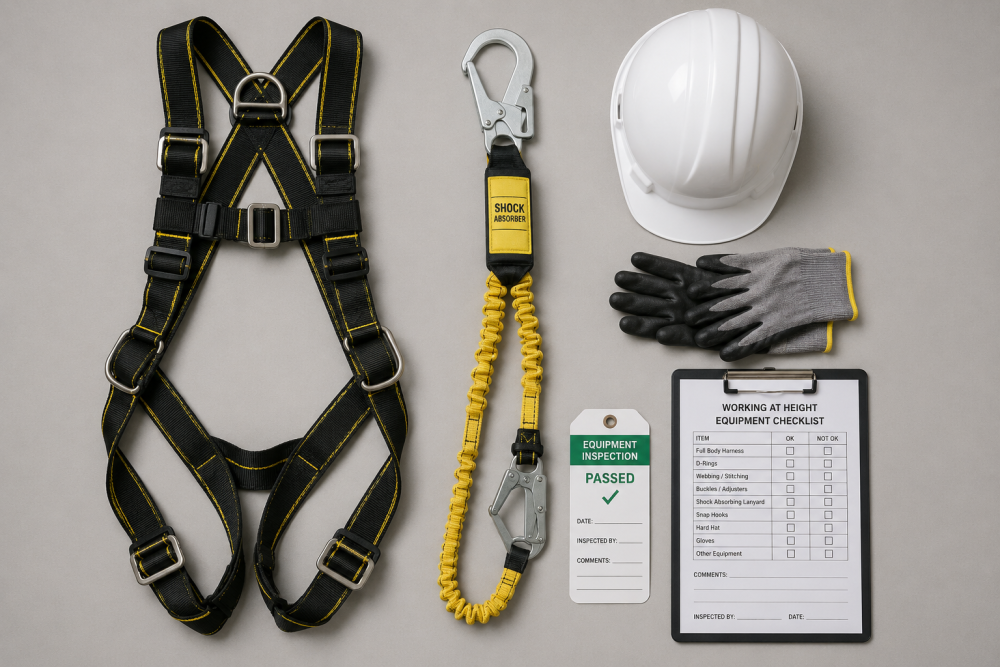

Quick Working at Heights UK Pre-Job Checklist
Before any task at height, every height worker should be able to answer yes to all of the following:
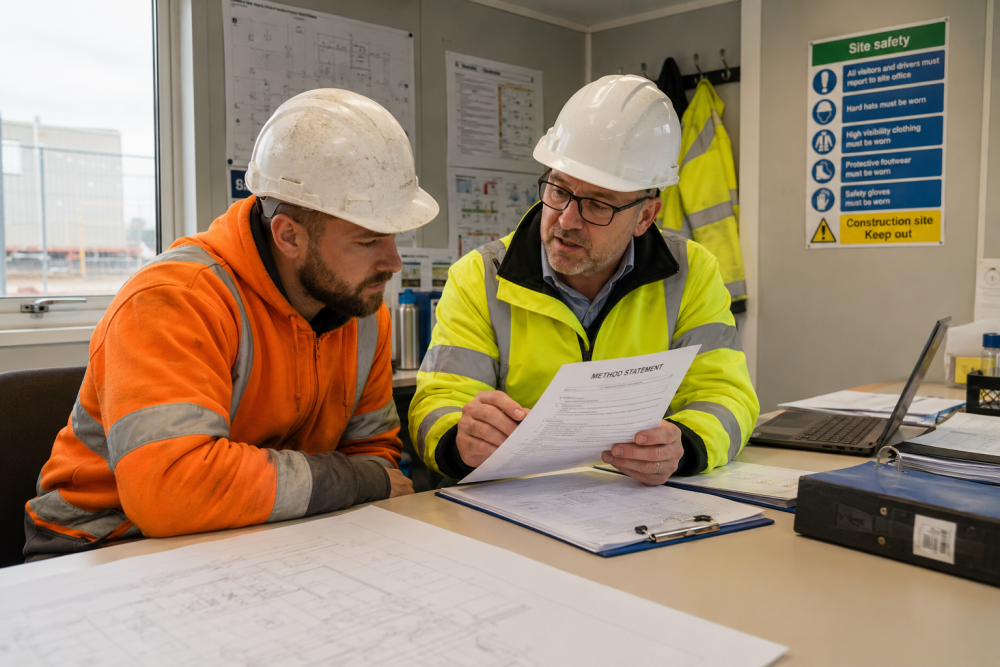
• Has a task-specific risk assessment and method statement been done?
• Is the equipment the right type, rated, and inspected within the last 12 months?
• Has the pre-use check been completed and recorded?
• Are anchor points certified and within their test date?
• Is there a written, practised rescue plan?
• Has the area below been cordoned off?
• Are weather conditions within safe limits?
• Does every person on the job hold current, relevant training?
Working at Heights UK Legal Responsibilities
Under the Work at Height Regulations 2005, legal duty doesn't sit with just one person — it's shared across every level of the job. Knowing where your responsibility starts and ends is essential for staying compliant and protecting height workers.
Employers and principal contractors must plan and organise work at height, assess risks, provide suitable equipment and training, supervise the work, and ensure a competent rescue plan is in place. They are also responsible for keeping inspection and examination records up to date.
Self-employed tradespeople carry the same duties as employers when working on their own. Roofers, plumbers, decorators, and electricians have all been prosecuted by the HSE for failing to plan or equip themselves properly for work at height — fines regularly run into five figures.
Height workers themselves have legal duties too: to follow the safe system of work, use equipment as trained, report defects immediately, and not put themselves or others at risk. Ignoring a method statement is not just unsafe — it can be a breach of the Health and Safety at Work etc. Act 1974.
Building duty holders (landlords, facilities managers, site owners) are responsible for ensuring permanent anchor systems, ladders, and access points are inspected, certified, and fit for use.
Failure to meet these duties exposes employers and individuals to HSE enforcement, unlimited fines, and in serious cases, prosecution under corporate manslaughter or gross negligence legislation.

Summary
Falls from height remain one of the leading causes of workplace deaths in the UK, yet almost every fatality involves a recognisable, repeated mistake: the wrong equipment, no inspection, no rescue plan, no training, or no exclusion zone.
None of these mistakes need ever happen. Modern height safety systems and properly designed height safety solutions — combined with current training and a culture that treats every job above ground level as serious — protect height workers and keep employers compliant with UK law.
A strong working at heights UK safety process should combine training, equipment checks, rescue planning, and regular site supervision.
If you supervise height work, audit your last three jobs against the ten mistakes above. If you're a height worker, audit your kit before your next shift. The few minutes either takes is the single best investment you'll make in your career and your life.
Frequently Asked Questions (FAQs)
What counts as working at height in the UK?
Under the Work at Height Regulations 2005, working at heights in the UK means any work where a person could fall a distance liable to cause personal injury. There's no minimum height threshold — work over an open excavation, on a stepladder, or on the back of a flatbed lorry all qualify.
How high is 'working at height' legally?
There is no specific height in UK law. If there's any potential for a fall that could injure someone, it counts. Most prosecutions actually relate to falls of less than two metres.
Do I need a harness for every job at height?
No. The hierarchy of control says fall prevention (guardrails, towers, MEWPs) comes before fall arrest (harnesses). A harness is the last line of defence, used when collective protection isn't practical. The right height safety solution depends entirely on the task.
How often should height safety equipment be inspected?
Personal fall protection equipment (harnesses, lanyards, fall arresters) must have a thorough examination by a competent person at least every 12 months, plus a documented pre-use check before each shift. Fixed anchor systems are typically recertified annually.
What training do height workers need in the UK?
Training depends on the equipment. Common UK schemes include PASMA for mobile tower scaffolds, IPAF for MEWPs, GWO Working at Heights for wind and industrial sectors, and CISRS for scaffolding. All workers should hold valid certification for the specific equipment they use.
Who is responsible for height safety on a UK site?
The duty is shared. Employers and the principal contractor must plan, supervise, and provide safe equipment and training. Workers must follow the safe system of work, use equipment correctly, and report defects. The HSE enforces the regulations.
Can a self-employed tradesperson be prosecuted for height safety failures?
Yes. The Work at Height Regulations 2005 apply to employers, the self-employed, and anyone in control of the work. Self-employed plumbers, roofers, electricians, and decorators have been prosecuted and fined for unsafe working at height.
What's the difference between fall prevention and fall arrest?
Fall prevention stops a fall happening — guardrails, towers, edge protection, MEWP baskets. Fall arrest catches a person after they've fallen — harness, lanyard, and anchor. Prevention is always the preferred control under UK law.
Working at height is the single biggest cause of fatal injury on UK sites. If your team needs certificated competence, our Working at Height Awareness course covers the legal duties, hierarchy of control and equipment checks described above.