
Site Safety at Height: 11 Requirements Every UK Site Must Get Right (2026)
Falls from height remain one of the leading causes of workplace deaths and major injuries in Great Britain. According to the HSE, they were the most common cause of fatal workplace accidents in 2024/25, accounting for over a quarter of worker deaths. The hardest part to accept? The vast majority of these accidents were entirely preventable.
There is a common myth that you only need to take precautions above two metres. That is wrong. Under the Work at Height Regulations 2005, there is no minimum height. If a person could fall a distance liable to cause injury, the law applies — whether that is off a roof, a scaffold, a ladder, or even into a hole in the ground.
Whether you are a site manager, a supervisor, or a worker heading up a tower scaffold, this guide breaks down the 11 working at height safety requirements every UK site needs to get right — in plain English. We will also cover the legal duties, the most common mistakes, and exactly what training you need to stay both safe and compliant.
Why Does Working at Height Safety Matter So Much?
Working at height is classed as one of the highest-risk activities in any UK workplace. The reason is simple: even a short fall can cause life-changing injuries or death. Many serious accidents happen from below head height — off the third rung of a ladder, or from a low platform.
The Work at Height Regulations 2005 set out a clear three-step approach that must be followed in order: first, avoid working at height where it is reasonably practicable; second, where it cannot be avoided, prevent falls using the right equipment and a safe system of work; and third, where the risk of a fall remains, minimise the consequences with collective protection (like nets) or personal protection (like harnesses).
The 11 requirements below put that hierarchy into practice on a real site.
1. Planning and Risk Assessment
Safety starts long before anyone leaves the ground. Every task at height must begin with a risk assessment carried out before work starts. This means identifying the fall hazards specific to the job and putting control measures in place to remove or reduce them. The planning should be proportionate — a quick job from a stepladder needs less than a multi-day facade installation, but both need genuine thought.


2. Permit to Work
Higher-risk work at height should be controlled with a formal Work at Height Permit. The permit confirms that hazards have been considered, controls are in place, and the right people have signed off. Always verify that authorisation has been granted before starting — the rule is simple: no permit, no work.
3. Competent Workers
Only trained, competent personnel should carry out work at height. Competence comes from a mix of training, knowledge, and experience suited to the task. Workers should also be medically fit for the demands of the job, since fatigue, dizziness, or certain health conditions can dramatically increase the risk of a fall. Under the regulations, everyone involved in organising, supervising, or carrying out the work must be competent.
4. Inspection of the Work Area
Before work begins, inspect the area thoroughly. Check that platforms, structures, and access points are sound and fit for use. Any unsafe conditions — damaged boards, loose fittings, unstable ground — must be removed or made safe before anyone goes up.

5. Fall Protection System
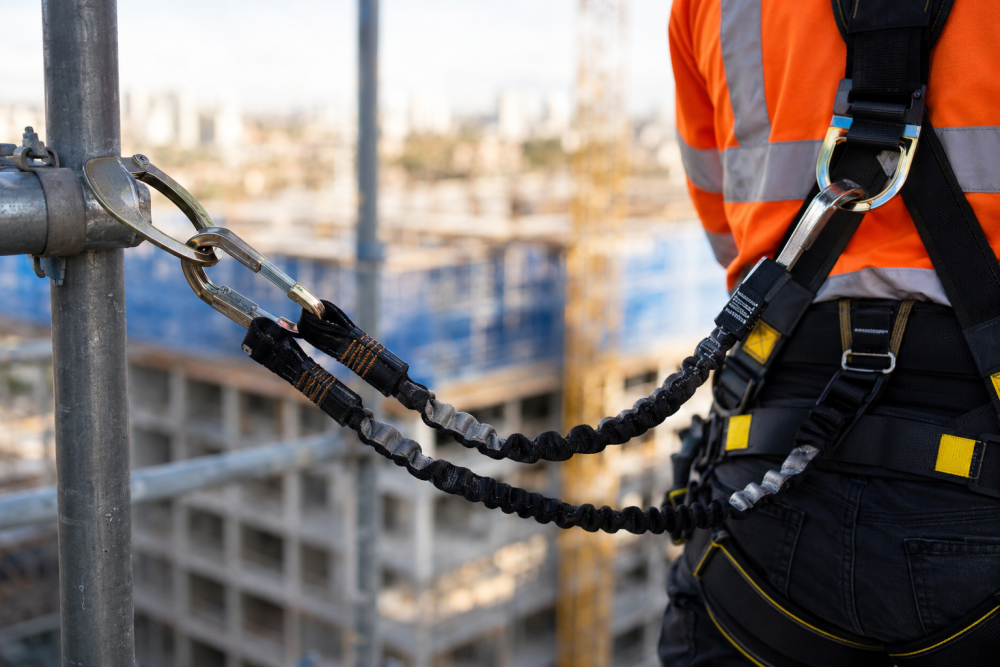
When a fall cannot be designed out, a reliable fall protection system is essential. A full-body harness should be mandatory for tasks that require one, paired with a double lanyard fitted with a shock absorber so the worker stays connected while moving. Crucially, every system depends on a secure anchorage point that can take the load of a fall.
6. Scaffolding Safety
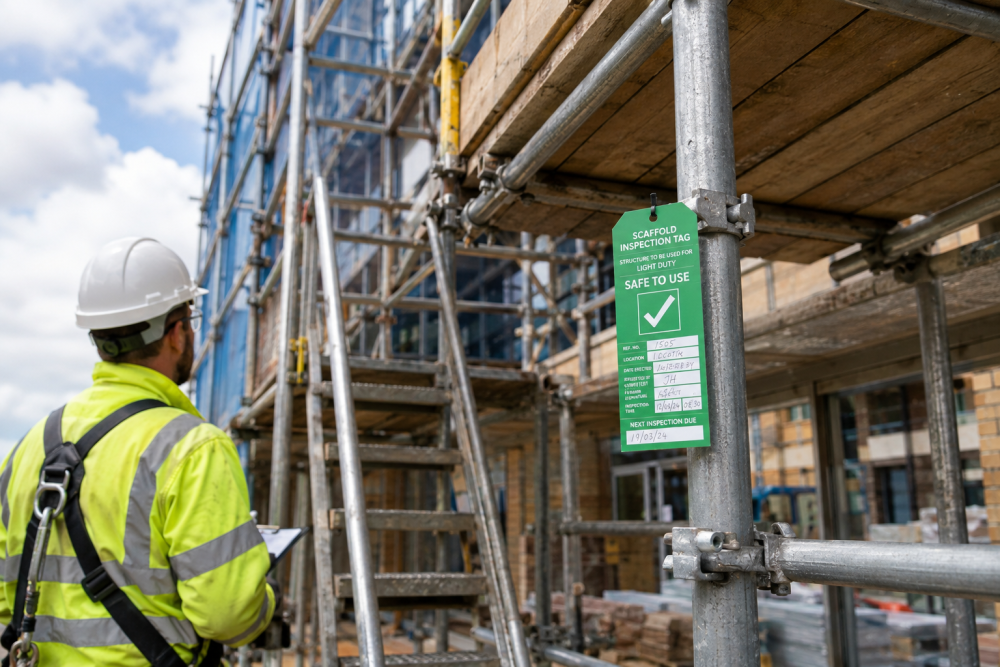
Scaffolding is only as safe as its inspection regime. Scaffolds must be erected and checked by a competent person and carry a certified inspection record. A green tag should be clearly displayed to confirm the structure is safe to use, and safe access — proper ladders or stair towers, not climbing the frame — must always be provided.

7. Ladder Safety
Ladders cause a surprising number of serious incidents, usually through misuse. Always inspect a ladder before use for damage or wear. Maintain three points of contact while climbing, and make sure the ladder is secured properly so it cannot slip or move. Ladders are best suited to short-duration, light tasks — not as a default working platform.
8. Dropped Object Prevention
Working at height puts the people below at risk too. Use tool lanyards to stop equipment falling, barricade the area beneath the work to keep people clear, and fit toe boards to platforms so items cannot be kicked over the edge.
9. Weather Monitoring
Conditions can turn a routine job dangerous in minutes. Work at height should stop during high winds, and rain and lightning must be monitored closely. The law is clear that work at height should not be carried out in weather that puts people's safety at risk, so build a simple go / no-go weather check into the daily plan.
10. Emergency Rescue Plan
Fall protection is only half the picture — you also need a plan for what happens if someone falls and is left suspended. Rescue equipment must be available on site, a trained rescue team ready to act, and emergency contact numbers displayed. Importantly, simply 'calling 999' is not considered an adequate rescue plan by the HSE.
11. PPE Requirements
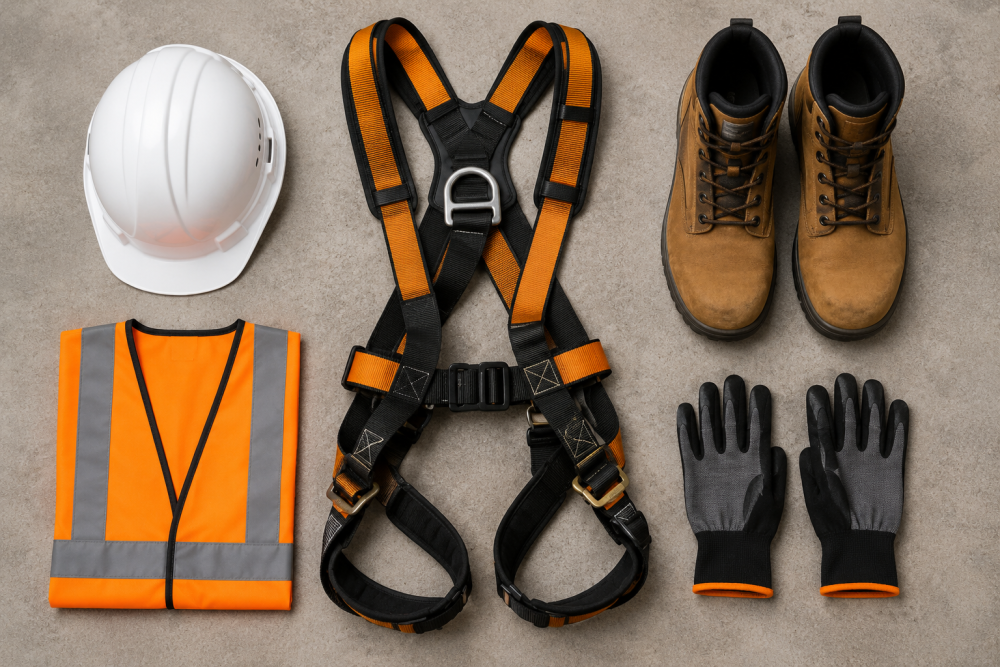
The right personal protective equipment is the last line of defence. For work at height this typically includes a hard hat, safety harness, safety shoes, gloves, and a reflective vest. All PPE should be inspected, well maintained, and replaced as soon as it is damaged.

What Counts as 'Work at Height' Under UK Law?
Many workers are surprised by how broad the definition is. Under the Work at Height Regulations 2005, you are working at height any time you are in a position where you could fall a distance liable to cause injury. In plain terms, that includes:
• Working on a ladder, stepladder, or trestle
• Working on a scaffold, tower, or mobile elevating work platform (MEWP)
• Working on or near a fragile roof or skylight
• Working close to an unprotected edge or opening
• Working next to a hole, pit, or excavation you could fall into
Walking up and down a permanent staircase does not count. But almost everything else on a typical site does — which is why proper training matters for so many trades.
Who Is Responsible for Working at Height Safety?
The law places duties on both employers and those who control the work (such as site managers and principal contractors), as well as on the workers themselves.
Employers and duty holders must ensure work at height is properly planned, supervised, and carried out by competent people using suitable, well-maintained equipment.
Workers have a legal duty to cooperate with safety measures, use the equipment provided correctly, and report any hazards or defects they spot.
On construction sites, these duties sit alongside the Construction (Design and Management) Regulations 2015 (CDM), which add further planning and coordination responsibilities.
Common Working at Height Mistakes (and How to Avoid Them)
Most falls come down to a handful of avoidable errors:
• Assuming the 'two-metre rule' still applies. There is no minimum height. Assess every task where a fall could injure someone.
• Using damaged or unsuitable equipment. A quick job is never a good reason to climb a broken ladder or an untagged scaffold.
• Skipping the rescue plan. A harness without a rescue plan can leave a fallen worker dangerously suspended.
• Letting untrained workers go up. Competence is a legal requirement, not a nice-to-have.
• Ignoring the weather. Wind and rain change the risk picture fast — reassess on the day.
Why Does Working at Height Training Matter for Legal Compliance?
The Work at Height Regulations 2005 require that anyone who works at height — or who plans and supervises it — is competent to do so. For most workers, that competence is demonstrated through recognised training. This applies across a huge range of UK trades:
• Roofers, scaffolders, and steel erectors
• General builders, joiners, and bricklayers
• Painters, decorators, and window cleaners
• Electricians, plumbers, and heating engineers
• Telecoms and cable installers
• Warehouse and maintenance staff using ladders or MEWPs
If your work could involve a fall, you must be competent to do it safely — and if you cannot demonstrate that competence, both you and your employer could be in breach of your legal duties. For most workers, recognised training is the clearest way to show it.
Summary
Working at height remains the leading cause of fatal injuries in UK construction — but nearly every one of those deaths is preventable. The 11 requirements in this guide work together as a system: good planning identifies the hazards, competent people carry out the controls, the right equipment protects against falls and dropped objects, and a rescue plan covers the worst case.
Get every layer right and you dramatically reduce the chance of a fall causing serious harm. And if your work involves heights, proper training is not just a legal box to tick — it is the single best investment you can make in keeping yourself and your team safe.
Frequently Asked Questions
At what height do the Work at Height Regulations apply?
There is no minimum height. The regulations apply any time a person could fall a distance liable to cause injury — even from below two metres. The old 'two-metre rule' no longer applies, so every task with a fall risk should be assessed.
What are the three main steps of the work at height hierarchy?
First, avoid working at height where it is reasonably practicable. Second, where it cannot be avoided, prevent falls using suitable equipment and a safe system of work. Third, where a fall risk remains, minimise the consequences using collective protection (such as nets) or personal protection (such as a harness).
Do I legally need training to work at height in the UK?
Yes, in practice. The law requires anyone working at height to be competent, and for most workers competence is demonstrated through recognised training. If your role could involve a fall, you should hold valid working at height training.
Is a harness on its own enough to keep me safe?
No. A harness is only effective as part of a wider fall protection plan that includes a secure anchorage point, a shock-absorbing lanyard, and — critically — a rescue plan for retrieving anyone who falls and is left suspended.
Who is responsible for safety when working at height?
Responsibility is shared. Employers and those controlling the work must plan it, supervise it, and provide suitable equipment and competent people. Workers must follow the safe system of work, use equipment correctly, and report any defects or hazards.
Does walking up a staircase count as working at height?
No. Using a permanent staircase in a building is specifically excluded. However, almost every other task where you could fall and be injured — ladders, scaffolds, roofs, edges, and openings — is covered.
What should I do if conditions become unsafe while working at height?
Stop work. If high winds, rain, lightning, or any other condition increases the risk of a fall or of dropped objects, the task should be paused and reassessed. The law is clear that work at height should not continue in weather that endangers people.
Meeting these requirements starts with competent, trained workers. Our Working at Height Awareness course is delivered online and issues a certificate on completion.