
Silica Dust Exposure on Site: A Practical Guide to Managing the Risk
If you cut, grind or drill on site, silica dust exposure is one of the most serious health risks you face — and one of the easiest to underestimate.
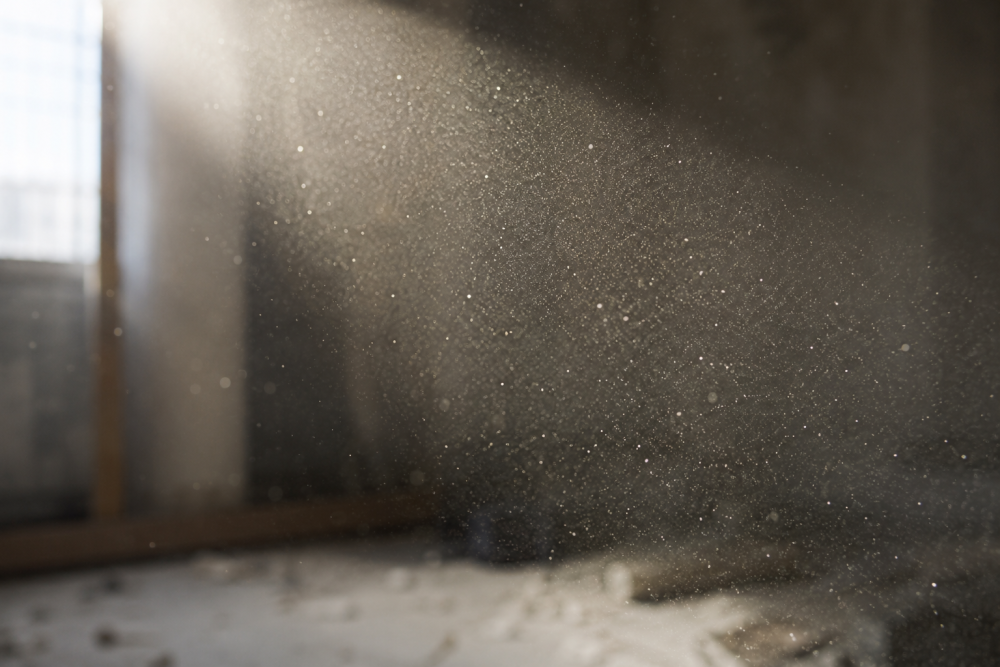
The dust that causes the most harm is invisible. Respirable crystalline silica (RCS) is so fine that it is normally invisible under ordinary lighting, so you can breathe it deep into your lungs without ever seeing a cloud. HSE estimates that over 500 construction workers are believed to die from exposure to silica dust every year. The good news is that silica dust exposure is largely preventable — by cutting out dust at source first, then adding water, extraction and a properly fitted silica dust mask, together with a few sensible daily habits. This guide covers the hidden health risk, the tasks that generate the most dust, the control measures that work, the practical habits that keep levels down, and why getting these right matters for the rest of your working life.

The Hidden Health Risk of Silica Dust Exposure
Silica is a natural mineral found in most construction materials — concrete, brick, mortar, sandstone, tiles and engineered stone can all contain high proportions of it. Whenever you cut, grind, drill, chase or crush those materials, you release respirable crystalline silica (RCS) into the air. The particles are small enough to bypass the body's natural defences and lodge deep in the lung tissue.
The danger is that silica dust exposure is cumulative and often silent for years. Repeated exposure scars the lungs permanently, and the damage builds up long before any symptoms appear. This is what makes it so easy to ignore on a busy site: nothing feels wrong today, so the risk gets treated as tomorrow's problem. The main disease it causes, silicosis, is incurable but entirely preventable — and prolonged exposure to RCS is also linked to lung cancer and chronic obstructive pulmonary disease (COPD).
In Great Britain, respirable crystalline silica has a Workplace Exposure Limit of 0.1 mg/m³ as an eight-hour time-weighted average. This is a legal maximum, not a safe working target. Because RCS is carcinogenic, employers must prevent exposure where reasonably practicable and otherwise reduce it to as low a level as is reasonably practicable.
What Are the Symptoms of Silicosis?
Because silicosis develops slowly, the early warning signs are easy to dismiss. The most common silicosis symptoms are a persistent cough, breathlessness — especially on exertion — and unusual tiredness. In the early stages these can be mistaken for a lingering chest infection, a smoker's cough or simply getting older, which is why they're so often ignored.

As the disease progresses, the silicosis symptoms tend to worsen: breathlessness becomes more severe, the cough more frequent, and everyday activity harder. If you develop a persistent cough, breathlessness or tiredness after working with silica-containing materials, speak to your GP or an occupational-health professional and tell them about your exposure. Silicosis cannot be reversed, but identifying it early means steps can be taken to prevent further exposure and further harm.
Tasks That Generate the Most Dust
Not every job carries the same risk. A handful of high-energy tasks produce the vast majority of dangerous crystalline silica dust, so knowing which ones to plan for is the first step in cutting exposure. If you recognise these on your job list, treat them as high-risk from the start:
• Cutting paving, kerbs, blocks and slabs with a cut-off saw or floor saw — one of the biggest dust generators on any site.
• Grinding concrete, screed or masonry, especially with an angle grinder, which throws fine dust straight into your breathing zone.
• Chasing walls for cables and pipes, which produces a concentrated plume of RCS in an enclosed space.
• Drilling and breaking concrete, brick and stone with hammer drills and breakers.
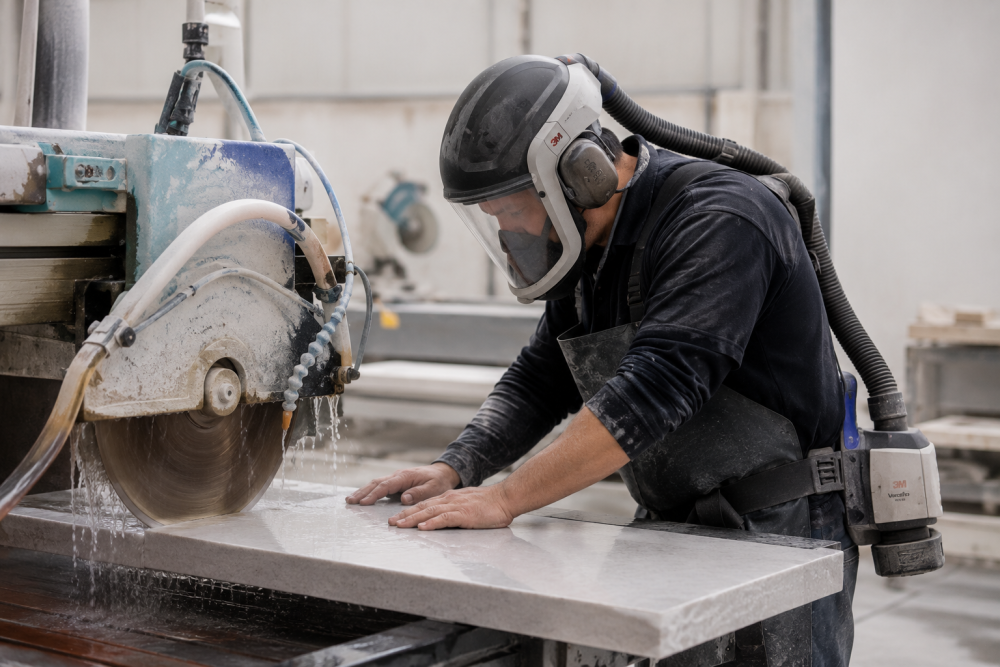
• Working engineered stone — cutting, grinding and polishing worktops carries a very high silica content and has driven a recent rise in silicosis cases among fabricators.
Working dry, in a confined or poorly ventilated space, or for a long stretch all push silica dust exposure higher. Plan these tasks in advance so the right controls and a properly fitted respirator are in place before the first cut, not fetched afterwards.

How to Control Silica Dust Exposure
HSE guidance in Great Britain follows a clear hierarchy: stop the dust being created, then stop what remains getting into the air, and only rely on masks for what's left. Before relying on water, extraction or RPE, consider whether the dust can be avoided altogether. This may include ordering materials pre-cut, using a block splitter instead of a cut-off saw, changing the design or work method, reducing the number of cuts, or selecting materials with a lower silica content.
Where dust can't be eliminated, three common control measures work best together — water suppression, on-tool extraction, and properly fitted respiratory protection.
1. Water suppression (wet cutting)
Feeding water to the blade or bit dampens dust at the exact point it's created, stopping most of it from ever becoming airborne. It's simple, cheap and highly effective for cutting, drilling and breaking. The key is a continuous supply for the whole task — a quick mist that runs dry, or water switched off "to see the cut line," lets silica dust exposure spike straight back up. Never dry-sweep the slurry afterwards; remove it before it dries, because dried residue can later be disturbed and become airborne.
2. On-tool extraction
Where water isn't practical, a silica dust extractor fitted directly to the tool captures dust at source before it reaches your lungs. This on-tool local exhaust ventilation (LEV) uses a shroud or hood connected to a suitable vacuum. For silica work you need an M-class (or H-class) silica dust extractor — an unsuitable domestic or workshop vacuum may not provide adequate filtration and can recirculate fine dust into the workplace. Keep the hose short and intact, empty and maintain the unit, and check the capture is working at the point where dust is generated. A well-matched silica dust extractor and tool combination can dramatically reduce airborne dust when it's specified and maintained correctly.
On-tool extraction is a form of local exhaust ventilation. The extraction unit must be thoroughly examined and tested by a competent person at least once every 14 months, with more frequent checks where wear or heavy use could reduce its performance.
3. Respiratory protective equipment (RPE)
RPE is the last line of defence, not the first — but it's still essential, because water and extraction rarely remove 100% of the dust. For many high-risk construction tasks involving silica, HSE guidance specifies RPE with an assigned protection factor (APF) of 20, such as an FFP3 disposable respirator or a reusable half mask fitted with a P3 filter. The exact silica dust mask must be selected according to the task and risk assessment. For longer work a powered respirator may be more comfortable over a full shift, but it does not automatically give a higher protection factor — that depends on its classification.
A respirator only protects you if it seals to your face, so tight-fitting RPE must be face-fit tested, and the wearer must be clean-shaven wherever the respirator seals against the face — stubble breaks the seal and lets crystalline silica dust leak straight in. Store your silica dust mask somewhere clean, inspect it before use, and replace filters as recommended.
Practical Daily Habits to Keep Exposure Down
The controls above do the heavy lifting, but good site discipline is what keeps silica dust exposure consistently low day to day. These habits cost little and make a real difference:
• Plan the dusty tasks first. Decide on elimination, water or extraction and the right RPE before the job starts — never mid-cut.
• Check your water and extraction actually work. Confirm the water is flowing and the silica dust extractor is capturing at source before every task, not just at the start of the day.
• Never dry-sweep or use compressed air. Both throw settled crystalline silica dust back into the air. Clean up wet, or use an M-class vacuum.
• Keep others clear. Put distance and barriers between the person cutting and everyone else, so one task doesn't expose the whole crew.
• Don't take the dust home. Vacuum down rather than brushing, keep dusty overalls out of the cab and away from your own clothes.
• Take face-fit testing and health surveillance seriously. Face-fit testing helps confirm that the selected tight-fitting respirator can adequately seal to the wearer’s face.
Where workers are regularly exposed to RCS and there is a reasonable likelihood that silicosis may develop, employers must provide suitable health surveillance. This can identify early indications of work-related ill health and allow action to prevent further exposure, but it cannot reverse existing lung damage.
A Special Warning on Engineered Stone
Engineered stone deserves particular caution because of its very high silica content. Dry cutting, grinding or polishing engineered stone is considered unacceptable by HSE. Use stone with the lowest available crystalline silica content, use effective water suppression, and control the contaminated mist and slurry it produces. Workers involved in processing, cleaning or machinery maintenance should use powered air-purifying RPE with an assigned protection factor of at least 20. Suitable health surveillance must also be provided where required.

Long-Term Health Matters More Than One Job
It's easy to see dust control as an extra chore that slows the job down. But silica dust exposure is one of the few workplace risks that quietly builds over a whole career and then can't be undone. By the time obvious silicosis symptoms appear, the lung damage is already permanent.
A water attachment, an M-class silica dust extractor and a properly fitted FFP3 respirator cost very little next to years of lost health and lost earnings. Controlling crystalline silica dust isn't about ticking a box for an inspector — it's about being able to breathe easily long after you've put the tools down. Eliminate the dust where you can, make water, extraction and RPE a habit on every dusty task, protect the people working around you, and treat any early silicosis symptoms as a reason to get checked, not to push through.
Protecting yourself from silica dust exposure is one part of maintaining a safe, professional working environment.
Explore our Health and Safety Online Training Courses to improve knowledge, reduce workplace risks and support safer working practices.
Silica is one of several hazardous dusts covered by COSHH duties. If your work also brings you into contact with asbestos-containing materials, our Asbestos Awareness course covers identification and safe response.