
Tool Theft Prevention: How to Protect Tools from Theft on Site and in Your Van
If you rely on your tools to earn a living, tool theft prevention isn’t optional — it’s part of running the business. UK tradespeople lost an estimated £99 million to tool theft in 2025, the average stolen-tools claim now sits at around £2,646, and 94% of victims never see their equipment again. Behind those numbers are real people losing days of work, cancelling jobs and paying higher premiums. The good news is that most thefts are preventable with a few sensible habits and modest investment. This guide covers the scale of the problem, how to protect tools in your van and in site storage, how marking and registering kit helps you recover it, and exactly what to do if the worst happens.
The Scale and Cost of UK Tool Theft
Tool theft is one of the most common and disruptive crimes affecting the trades, and the figures explain why it comes up on almost every site. Recent research from Simply Business found that over half of tradespeople (51%) have had tools stolen, and among those victims, a staggering 94% never recovered a single item. The average claim has risen 24% since 2020 to about £2,646, adding up to an estimated £99 million lost across the industry in 2025 alone.
The knock-on cost is far worse than the sticker price. When MPs debated the issue in Parliament, they put the real cost of a single incident at £6,000–£7,000 once you add vehicle repairs (around £1,500) and lost earnings and business disruption (around £2,000) on top of roughly £3,000 of stolen tools. And it isn’t only about money: more than three in four tradespeople (77%) say tool theft has damaged their mental health, and nearly two-thirds believe the problem is getting worse.
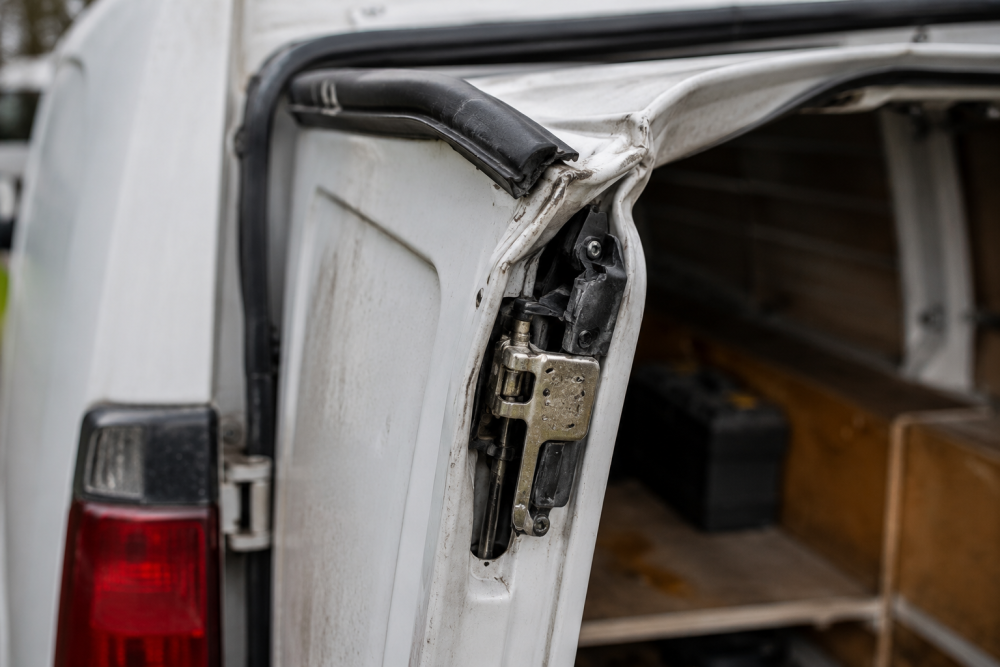
One clear trend for 2026 is a shift in how thieves operate. Whole-van theft has plummeted 98% since 2023 as immobilisers and trackers made stealing entire vehicles harder. In response, criminals switched to “peel and steal” attacks, forcing van doors open from the top corner and grabbing what’s inside within seconds. Property damage is now the single most reported cause of tool theft, which is exactly why a layered defence — covered next — matters more than any one lock.

How to Prevent Tool Theft from Vans
Vehicles remain the number one target, accounting for a large share of all tool theft, so securing your van is the highest-value thing you can do. No single measure stops a determined thief, which is why the professionals who rarely get hit rely on layers: each obstacle adds time, and time is the one thing a thief working in the dark doesn’t have. Start with the free habits, then build up the physical and electronic defences.

The most important habit costs nothing: lock up every single time. A large share of thefts from vehicles happen simply because a door was left unlocked — even for the minute it takes to grab a coffee or drop off materials. Get into the routine of double-checking your doors before you walk away, every time, no exceptions.
From there, harden the van itself:
• Fit aftermarket locks. Factory central locking is rarely enough. Deadlocks and slamlocks add strong, independent locking points that resist the “peel and steal” method.
• Add internal window and door grilles. Windows and door skins are the weakest points; grilles and anti-peel plates stop a quick smash-or-force grab.
• Fit a Thatcham-rated alarm. Look for a CAT 1 smart alarm, ideally with a motion sensor covering the load area, not just the cab.
• Beat relay theft. If your van has keyless entry, keep the fob in a signal-blocking (Faraday) pouch so thieves can’t clone the signal to unlock it.
• Park strategically. Choose well-lit, busy areas with CCTV, and back the rear or side doors up against a wall or hedge so they physically can’t be opened.
• Empty it overnight where you can. Remove tools and display a sticker saying no tools are left in the vehicle — the fewer targets inside, the less reason to break in at all.
Finally, secure the tools inside the van as a last line of defence. Bolt a high-security tool chest or vault to the cargo floor and fasten loose power tools to the frame with heavy-duty padlocks or specialist locking devices. That way, even if someone forces entry, they can’t simply scoop everything up and be gone before the alarm draws attention. A visible “tools locked in a secured chest” sticker can be enough to send an opportunist looking for an easier target elsewhere.
Secure Storage on Site
Your van isn’t the only weak point. Tools left on site overnight — or even during a long break — are just as vulnerable, particularly on open plots and part-built projects where access control is limited. The same layered thinking applies: control who can reach the tools, slow down anyone who does, and make the kit hard to move quickly.
Where possible, lock tools inside a dedicated container, site cabin or fenced and gated compound rather than leaving them in a corner of the build. Choose storage built to resist prising, drilling and impact, and bolt smaller vaults down so they can’t simply be carried off with the contents still inside. For high-value plant and power tools, a mobile tool vault rated to a recognised security standard is well worth the outlay.
Good site discipline does a lot of the work for free:
• Keep an up-to-date inventory of what’s stored where, so you notice immediately if something is missing.
• Never leave tools on show when you knock off — out of sight genuinely is out of mind for opportunists.
• Use lighting and CCTV around storage areas; even a visible dummy-camera and motion-activated floodlight raise the perceived risk for a thief.
• Restrict keys and access codes to the people who actually need them, and change codes when workers leave the project.
On shared or larger sites, talk to the site manager about a central secure store and agree who is responsible for locking up. It’s also worth building relationships with neighbouring trades — a site where everyone keeps an eye out is a far less attractive prospect than one where tools are left scattered and unattended.


Marking Tools to Prevent Theft and Aid Recovery
Locks and alarms slow thieves down; marking tools to prevent theft makes stolen kit far harder to sell and much easier to recover. This is where many tradespeople under-invest, yet it’s one of the cheapest and most effective wins available. The aim is twofold: deter the theft in the first place, and give the police a way to link recovered tools back to you.
Combine three layers of identification:
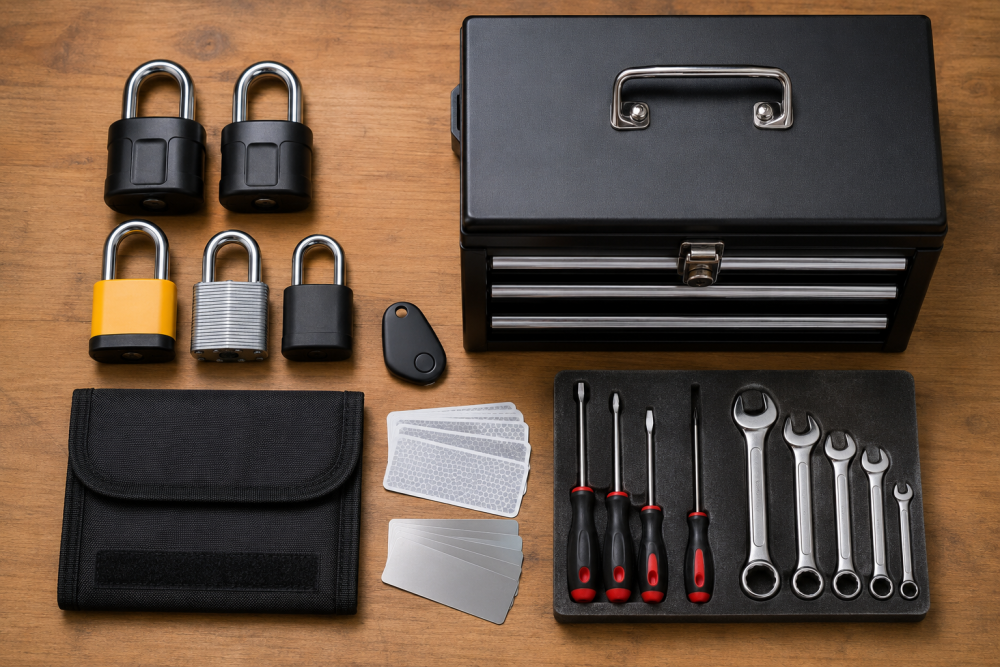
• Visible marking. Engrave, paint or use branded asset tags to put your name or company name on every tool. Obviously marked kit is less attractive to steal and awkward to shift on the second-hand market.
• Forensic marking. A UV or DNA-style forensic marking solution is dabbed on and invisible to the naked eye, letting officers link a recovered tool to you with a scanner or UV torch — equipment police forces already carry. Display a sticker advertising that your tools are forensically marked.
• Trackers. Low-cost GPS tags or Bluetooth trackers (from around £29) hidden among your kit can pinpoint stolen tools. Recent police operations have recovered millions of pounds’ worth of marked, traceable equipment this way.
Marking only works if you also register the details. Photograph your tools, record every serial number, and log them on a national property register such as the UK National Property Register (Immobilise). Officers can only return recovered tools to their rightful owner when the theft has been reported and the tool is identifiable, so keep those records somewhere separate from the van.
A quick word on the law: the Equipment Theft (Prevention) Act 2023 created a power to introduce forensic-marking and registration rules, but in October 2025 the Home Office confirmed it would use that power only for all-terrain vehicles and removable GPS units — it decided against extending it to power tools, despite having the option. There is therefore no legal obligation to mark your tools, which makes doing it voluntarily all the more worthwhile for protecting your own livelihood.
It’s worth keeping an eye on a separate piece of legislation, too. The Theft of Tools of Trade (Sentencing) Bill, a private member’s bill, aims to reclassify tool theft into a higher harm category so courts can hand down tougher sentences. As of mid-2026 it is still working its way through Parliament, with its second reading delayed more than once — so nothing has changed in law yet, but the direction of travel is towards taking tool theft more seriously.

What to Do When Tools Are Stolen
Even with every precaution in place, thieves sometimes get lucky. Acting quickly gives you the best chance of recovery and a smoother insurance claim, so it helps to know the steps before you ever need them.
• Report it to the police straight away and get a crime reference number. Nearly a quarter of tool thefts go unreported, which lets offenders keep operating — reporting also helps police map hotspots and target the gangs behind organised theft.
• Notify your insurer with your inventory, photos, serial numbers and the crime reference. Check your policy specifically covers theft from vehicles, as some standard policies don’t.
• Flag the serial numbers as stolen on your national property register and alert the manufacturers, so the tools show up as stolen if anyone checks them.
• Spread the word locally. Post in local trade groups and on social media — stolen tools frequently surface within days on second-hand marketplaces and at car boot sales.
• Monitor online listings in your area over the following week. Spotting your own marked tools for sale has helped many tradespeople recover their kit and support a prosecution.
Your Tool Theft Prevention Checklist
Run through this quick checklist to see where your setup could be tightened:
• Lock the van every time, even for a minute
• Deadlocks, slamlocks and window grilles fitted
• Thatcham-rated alarm and Faraday pouch for the fob
• Tools bolted in a secured chest and removed overnight
• Site tools stored in a locked, lit, access-controlled space
• Every tool visibly and forensically marked
• Serial numbers photographed and registered
Tool theft is expensive, common and increasingly sophisticated, but it isn’t inevitable. Layer up your van security, lock tools away properly on site, mark and register everything, and know your reporting steps in advance. A few hundred pounds of locks, markings and trackers is small next to a £3,000 loss and weeks of downtime.
Protecting tools is one part of maintaining a safe and professional working environment. Explore our construction health and safety training courses to improve knowledge, reduce workplace risks and support safer working practices. (https://buildsafeskills.com/)