
HAVS Explained: Symptoms, Exposure Limits and UK Law (2026)
If you're on the tools day in, day out — gripping drills, grinders, breakers, sanders, or chainsaws — there's an injury that develops in the hands of many workers before they ever spot it. It's called Hand-Arm Vibration Syndrome, or HAVS, and it's one of the most common yet most preventable trade injuries in UK construction.
It develops slowly. You won't feel it after one job, or even one month. It builds over years of daily tool use — and once the nerve and blood-vessel damage is done, it can be permanent. That's exactly why catching it early, and knowing how to control your exposure, matters so much.
In this guide we'll cover what HAVS actually is, the early warning signs to watch for, which tools put you most at risk, what the law requires of your employer, and the practical steps that keep your hands working for the long haul.
What Is HAVS?
HAVS is permanent damage caused by regular use of vibrating hand-held tools. The vibration travels up through your hands and arms and, over time, harms the nerves, blood vessels, and joints in your fingers and hands.
It's known by a few names. The blood-vessel side of the condition — where fingers go white and numb — used to be called vibration white finger. Doctors now group all the effects together under the broader term HAVS, and stage the severity using something called the Stockholm Workshop Scale. Whatever it's called, the message is the same: it's disabling, it's permanent, and it's almost entirely preventable.
Important: If you're already getting tingling, numbness, or fingers that go white in the cold, don't wait for it to “sort itself out.” Report it to your employer and ask to see occupational health. Early reporting and reduced exposure may prevent symptoms from progressing — but established HAVS damage can be permanent.
What Are the Early Warning Signs?
HAVS usually shows up in stages. The earlier you notice these, the more you can do about it:
● Tingling or “pins and needles” in the fingers, especially after using tools
● Numbness that doesn't quickly go away
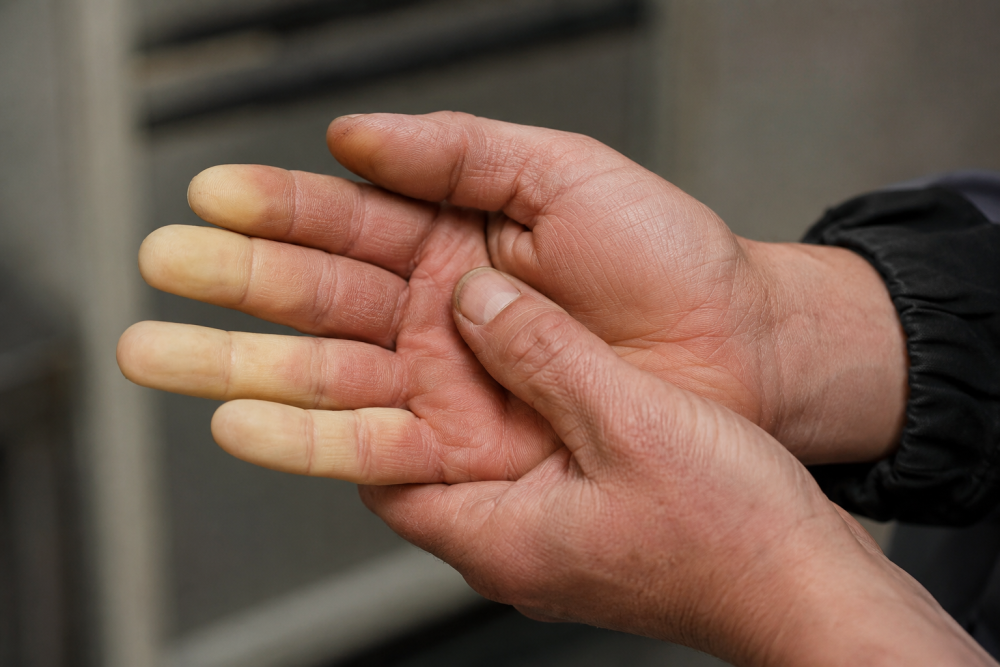
● Fingers turning white (blanching) — particularly in the cold. This is the classic sign.
● Loss of grip strength — dropping tools, or struggling with small items like screws and buttons
● Loss of feeling — trouble telling hot from cold, or fiddling with small parts
If you're noticing any of these, flag it early. Catching HAVS in its first stage and cutting exposure can stop it from getting worse — but any damage already done can be permanent, so the sooner you act, the better.

Which Tools Put You Most at Risk?
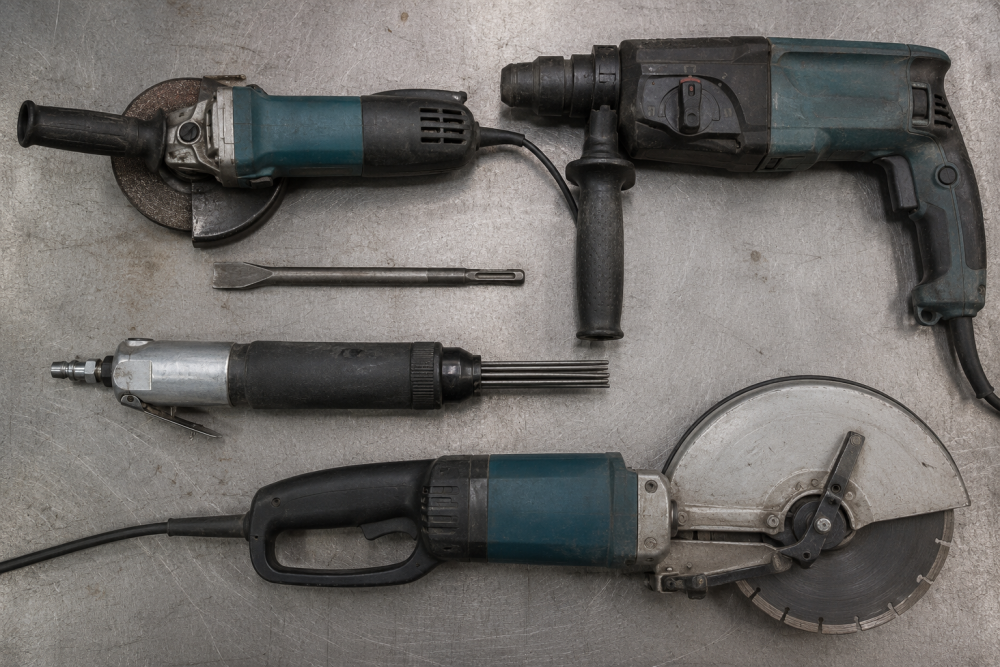
Some tools vibrate far more than others. The worst offenders on a typical UK site include:
● Breakers and jackhammers
● Angle grinders
● Hammer drills and SDS drills
● Needle scalers and chipping hammers
● Petrol disc cutters
● Impact wrenches
● Sanders and polishers
● Chainsaws and brush cutters
Vibration levels can vary substantially even between tools of the same type, depending on the model, condition, accessory, material, and the way the tool is used. Because of this, the only reliable way to know your exposure is to calculate it using the tool's vibration magnitude and your actual trigger time — the HSE's free online exposure calculator does exactly this.

What Does the Law Say?
HAVS isn't just a health issue — it's a legal one. In the UK it's governed by the Control of Vibration at Work Regulations 2005, which set two key thresholds based on your average exposure over an 8-hour day (written as A(8)):
● Exposure Action Value (EAV): 2.5 m/s² A(8) — at this level, employers must introduce technical and organisational controls to reduce exposure. Workers considered at risk should also be placed under suitable health surveillance.
● Exposure Limit Value (ELV): 5 m/s² A(8) — the legal daily limit that employers must normally ensure is not exceeded, subject only to the limited weekly-averaging provisions permitted by the regulations.
To make these easier to track, the values are often converted into “HSE points.” The action value equals 100 points, and the limit value equals 400 points. Many employers now use point systems or wearable monitors so workers can see their exposure adding up across the day without doing the maths by hand.

And this is enforced. In January 2026, Chesterfield Royal Hospital NHS Foundation Trust was fined £40,000 after several employees developed serious, irreversible vibration-related conditions, including HAVS and carpal tunnel syndrome. In November 2025, Nottingham City Homes Limited was fined £32,000 after the HSE received more than ten reports of vibration-related ill-health among workers, including bricklayers, joiners, electricians, and plasterers. The pattern is clear: the HSE is pursuing employers who fail to manage the risk, not just cases where someone is already injured.
How Do You Actually Protect Your Hands?
Whether you're the one on the tools or the one running the site, these are the measures that make a real difference:
● Pick the right tool for the job. Lower-vibration tools exist for most tasks, and a modern, well-maintained tool vibrates far less than a worn-out old one.
● Keep tools maintained. Blunt blades, worn bearings, and unbalanced discs all crank up vibration. Sharp, serviced tools cut faster and shake less — so you finish quicker and reduce the strain on your hands.
● Limit your trigger time. It's not how long you hold the tool, it's how long it's actually running and vibrating. Swap tasks with a mate, take breaks, and don't grip harder than you need to.
● Keep warm and dry. Cold hands make HAVS worse and hide the early symptoms. Note that “anti-vibration” gloves shouldn't generally be relied on to control vibration exposure — their main practical benefit in HAVS prevention is helping keep hands warm and dry, which supports circulation.
● Report symptoms early. The single most important habit. Early-stage HAVS can be managed if you stop the exposure in time.
● Attend your health surveillance. If you are exposed above the action value, or are otherwise considered at risk, your employer should provide suitable health surveillance. These checks can identify symptoms early and establish a baseline.


Why Does Training Matter?
Most HAVS cases come down to one thing: nobody realised how much risk they were carrying until the damage was done. Workers didn't know the early signs, and employers didn't know their legal duties or how to calculate exposure.
Proper hand-arm vibration training closes that gap. It teaches teams how to spot symptoms early, how to work out and track exposure using the HSE points system, and exactly what the law requires — protecting both the worker's hands and the business from a costly HSE prosecution.
Frequently Asked Questions
What is HAVS?
HAVS (Hand-Arm Vibration Syndrome) is permanent damage to the nerves, blood vessels, and joints in the hands and arms, caused by regular use of vibrating hand-held tools such as drills, grinders, and breakers. It develops slowly over months or years and cannot be reversed once established.
What are the first signs of HAVS?
The earliest signs are usually tingling or “pins and needles” in the fingers after using tools, followed by numbness and fingers turning white in the cold (blanching). Loss of grip strength and reduced feeling in the fingertips can follow. Report these early — they are your best chance to stop the condition progressing.
What are the legal vibration exposure limits in the UK?
Under the Control of Vibration at Work Regulations 2005, the Exposure Action Value is 2.5 m/s² A(8), at which employers must introduce controls to reduce exposure and place at-risk workers under health surveillance. The Exposure Limit Value is 5 m/s² A(8), the daily limit employers must normally ensure is not exceeded (subject to limited weekly-averaging provisions). These convert to 100 and 400 HSE points respectively.
Do anti-vibration gloves prevent HAVS?
Not reliably. Anti-vibration gloves don't consistently reduce the frequencies of vibration that cause HAVS, so they shouldn't be relied on as your main control. Their genuine benefit is keeping hands warm and dry, which helps reduce symptoms and keeps circulation healthy.
Can HAVS be cured?
No. HAVS is permanent and cannot be cured once the damage is done. However, if it's caught in the early stages and vibration exposure is stopped or greatly reduced, it can be prevented from getting worse. This is why early reporting and health surveillance are so important.
Whose responsibility is it to manage vibration risk?
Under the UK law, employers must assess vibration exposure, keep it below the legal limits, provide health surveillance where exposure meets the action value, and train workers on the risks. Failing to do so can result in prosecution and substantial fines, as recent HSE enforcement cases have shown.
How long can I use a vibrating tool before it becomes a risk?
It depends entirely on the tool's vibration level. High-vibration tools like breakers or grinders can reach the daily action value in well under an hour of trigger time, while lower-vibration tools allow much longer. The HSE exposure calculator and the HSE points system are used to work this out for each specific tool and task.
Who needs hand-arm vibration training?
Anyone who regularly uses vibrating hand-held or hand-guided tools, plus the supervisors and managers responsible for them. This includes groundworkers, demolition crews, road workers, joiners, fabricators, landscapers, and many other trades — as well as anyone with a duty to assess and control the risk.