
What Happens If You Fail the CITB Test? Next Steps and Retake Rules
Failing the CITB touch screen test is frustrating — especially when a job, a site induction, or a CSCS card application is waiting on the result. But here's the good news: failing is not the end of the road. Thousands of UK construction workers don't pass on their first attempt, and nearly all of them go on to pass on a resit.
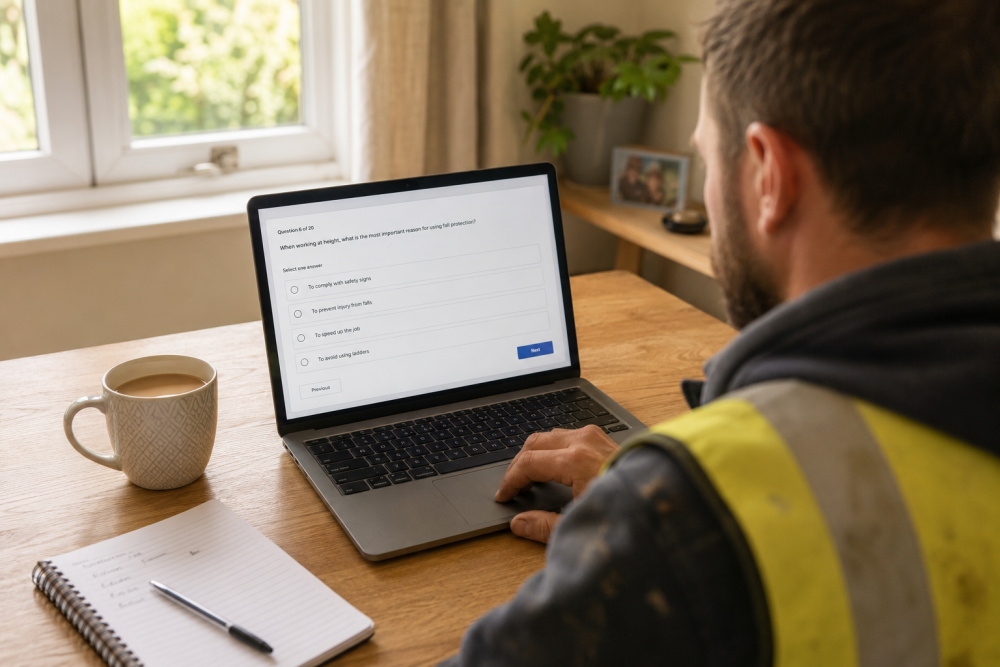
The CITB Health, Safety and Environment (HS&E) test — often searched for as the CITB touch screen test or CSCS test — is the gateway to working on most UK construction sites. It's a 45-minute test with 50 multiple-choice questions, taken on a touch screen at a Pearson VUE test centre. If you fail, there are clear rules on when and how you can take it again.
In this guide, we'll explain exactly what happens after a fail, the official CITB test resit rules, how much a retake costs, how to book it, and — most importantly — how to make sure you pass next time.


What Happens on the Day If You Fail?
You'll find out your result straight away. Before you leave the test centre, you'll be given a score report that tells you whether you passed or failed.
If you failed, don't throw that report away — it's the most useful revision tool you'll get. The score report shows the topic areas where you answered questions incorrectly, such as fire safety, manual handling, working at height, or PPE. It tells you exactly where your knowledge gaps are, so you know what to revise before your CITB test resit.
One thing to be aware of: your test fee is not refunded if you fail. Every attempt is paid for separately, so it pays to be properly prepared before you sit the test again.
CITB Test Resit Rules: The Key Facts
Here are the main retake rules every candidate should know:
• You must wait 48 hours. After a failed attempt, you cannot sit the test again straight away. CITB requires a short waiting period — typically 48 hours after your failed test — before you can take it again.
• There is no limit on attempts. You can resit the CITB touch screen test as many times as you need. There is no maximum number of tries.
• You must rebook. A resit is a brand-new booking. Your failed attempt doesn't carry over — you go through the normal CITB exam booking process again.
• Book the right test type. Make sure you rebook the same test you need for your card — for most workers that's the CSCS operative test. Passing the wrong test type won't count towards your CSCS card, even if you pass it.
In short: fail, wait at least 48 hours, rebook, pay again, and resit. Simple — but each failed attempt costs you money and time off work, which is why preparation matters so much.

How to Book Your CITB Test Resit
CITB exam booking for a resit works exactly the same as your original booking:
• Book online. Go to the official CITB website (citb.co.uk) and book through the Pearson VUE booking system, or book by phone. You'll need your personal details and a debit or credit card.
• Choose your test centre. There are Pearson VUE test centres across the UK, so you can usually find one close to home with availability within days.
• Pick a sensible date. Don't automatically book the earliest possible slot. Give yourself enough time to revise your weak areas properly — a week or two of practice is often the difference between a pass and another fail.
If you'd rather have the whole thing handled for you, our CITB test booking service takes care of finding your nearest centre, booking your slot, and confirming everything by email — so you can focus on revising.
Why Do People Fail the Health and Safety CITB Test?
The health and safety CITB test isn't designed to trip you up, but it does have a high pass mark. For the operative test, you need to answer 45 out of 50 questions correctly — that's 90%. You can only afford to get 5 questions wrong.
The most common reasons people fail are:
• Not practising with mock tests. Reading a revision book isn't enough. The real test is on a touch screen, timed, and under pressure. If the first time you experience that format is on test day, you're at a disadvantage.
• Underestimating behavioural questions. Many questions ask what you should do in a situation, not just what a rule says. These judgement-based questions catch out experienced workers who rely on habit rather than best practice.
• Rushing. 45 minutes for 50 questions is plenty of time. Misreading a question — missing the word 'not', for example — is an easy way to throw away marks.
• Weak spots left unfixed. Most people are strong in the topics they use every day and weak in the ones they don't — fire extinguishers, hazardous substances, or environmental awareness. The test covers everything.
How to Pass Your Resit: Practise Until You Pass the Mocks
Here's the simplest and most reliable strategy we give every learner: take mock tests until you can pass them comfortably — then book your resit.
Mock tests mirror the real CITB touch screen test: same question style, same topics, same time pressure. They do two things a revision book can't:
• They show you exactly which topics you keep getting wrong, so your revision is targeted instead of guesswork.
• They build familiarity with the touch screen format, so nothing about test day feels new or stressful.
Our advice is straightforward: before booking your CITB test resit, practise with our free mock test until you are passing consistently — not scraping through once, but passing again and again. Once you can pass the mocks reliably, you're ready to pass the real thing. Learners who reach that level almost always pass their resit first time.
Combine mock test practice with your score report from the failed attempt. If the report says you were weak on working at height, drill those questions until they're your strongest topic. That's how a fail becomes a pass.
What Happens Once You Pass?
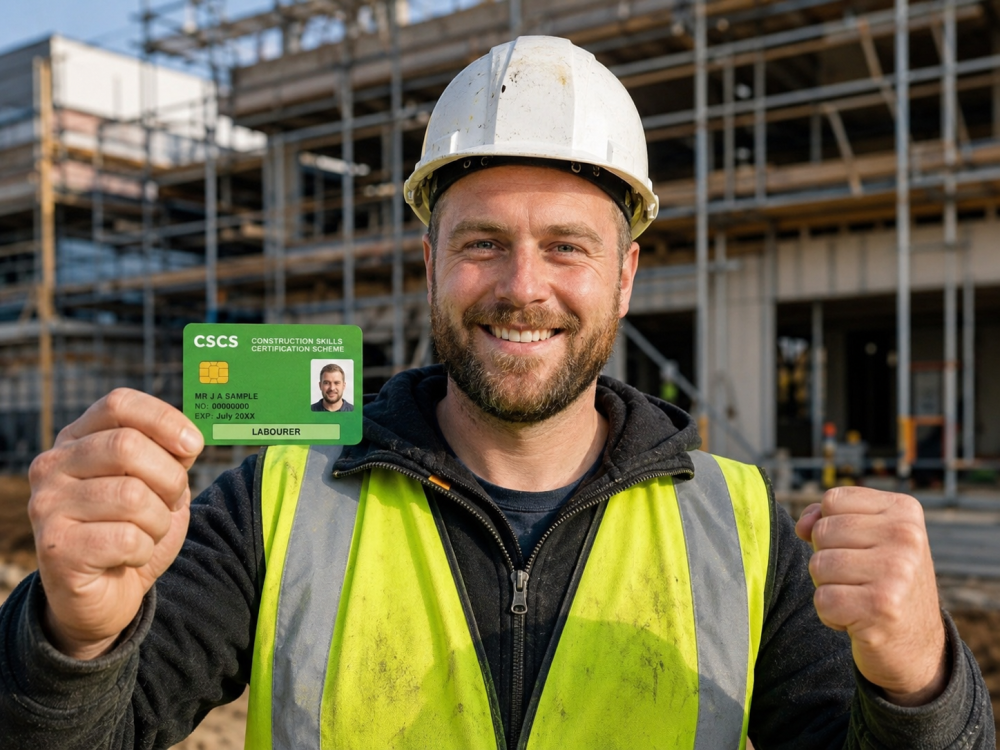
When you pass, your result is registered with CITB and you can use it to apply for your CSCS card. Two important points:
• Your pass is valid for 2 years. You must apply for your CSCS card within two years of passing the test. Leave it longer and you'll have to sit the test again.
• Match the test to the card. The CSCS operative test covers most site workers and labourers applying for Green, Blue and most Gold cards. Supervisors and managers need the specialist or Managers and Professionals (MAP) versions.

Summary
Failing the CITB test stings, but it changes nothing about your future in construction. The rules are simple: wait at least 48 hours, rebook through the normal CITB exam booking process, pay the full fee, and sit it again. There's no limit on attempts — but there's also no reason to keep paying for them.
The workers who pass their resit are the ones who treat the mock tests as the real test. Practise on our website until passing feels routine, fix the weak areas your score report highlighted, and walk into the test centre knowing you've already passed this test a dozen times. Do that, and your next attempt will be your last.
Frequently Asked Questions
How soon can I retake the CITB test after failing?
You'll normally need to wait 48 hours after a failed attempt before you can sit the CITB touch screen test again. In practice, most people use a week or two to revise properly before rebooking.
How many times can I resit the CITB test?
There's no limit. You can resit as many times as you need — but every attempt costs the full test fee, so good preparation saves you real money.
How much does a CITB test resit cost?
Each attempt costs £23.50 (the fee from 1 April 2026), paid when you book. The fee is not refundable if you fail or miss your appointment.
Do I get my money back if I fail?
No. The test fee covers the sitting, not the result. That's why it's worth practising with mock tests until you're passing them comfortably before you book.
What is the pass mark for the CSCS operative test?
For the operative-level health and safety CITB test, you need 45 correct answers out of 50 questions — a 90% pass mark — in 45 minutes.
Will I be told which questions I got wrong?
Not the exact questions, but your score report will show the topic areas where you lost marks. Use it to target your revision before your resit.
Is the CITB test the same as the CSCS test?
People use the names interchangeably. The official name is the CITB Health, Safety and Environment (HS&E) test. It's also called the CITB touch screen test or the CSCS test, because passing it is required for a CSCS card.